



What does it take to be heard in STEM? Meet Cinzia Rubattino
Women are often fewer in the room, and this can make it more difficult to be immediately recognised, to speak with confidence, or to emerge in complex technical and managerial discussions.
”
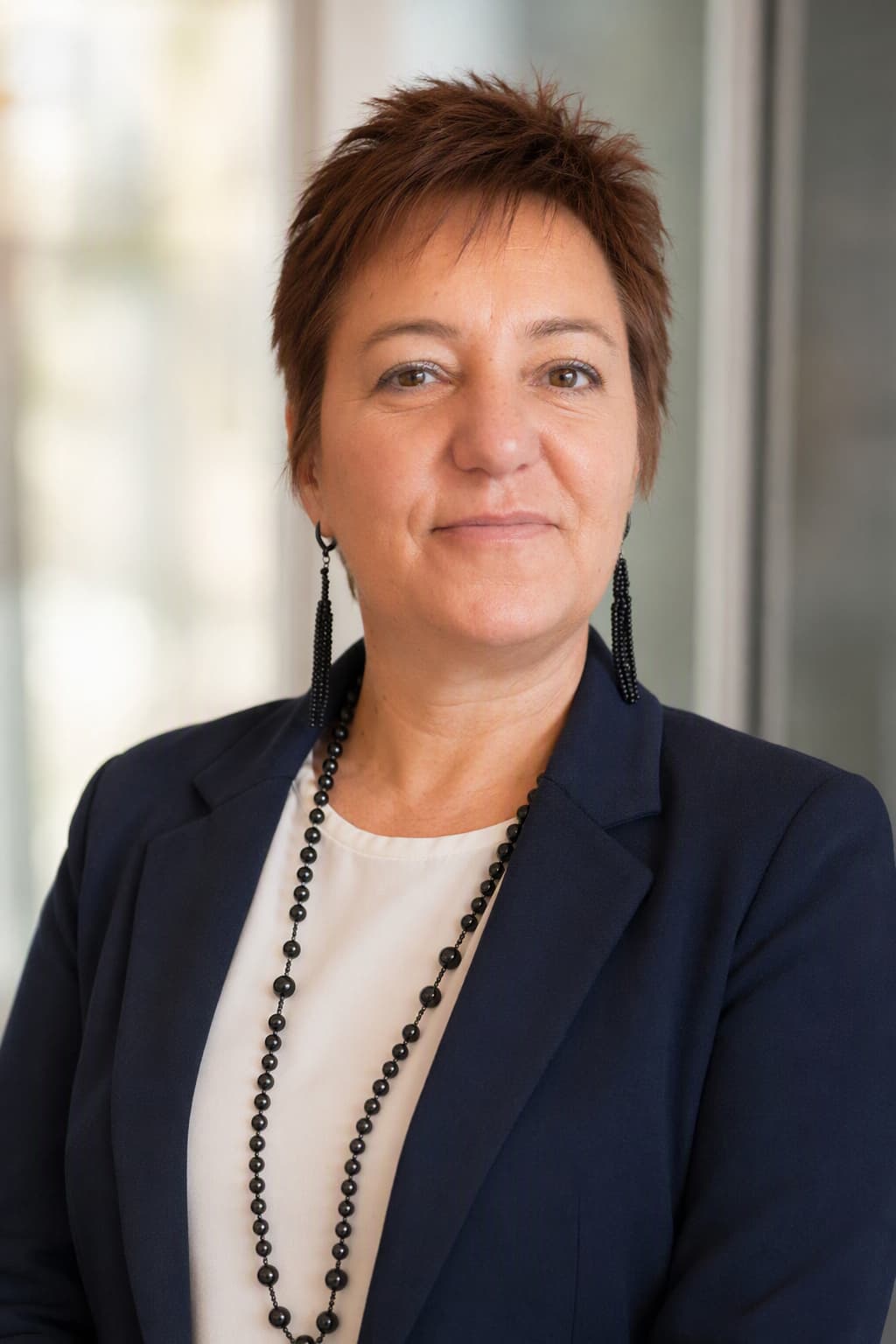
Behind every technological breakthrough are people whose ideas, expertise and determination make innovation possible. As part of our Women in STEM campaign, we are highlighting the women contributing to CompSTLar and the experiences shaping their careers.
In this edition, we meet Cinzia Rubattino, Senior Researcher and Project Manager at Engineering Ingegneria Informatica S.p.A., where she works within the Group Research & Innovation in the Data Platforms and Ecosystems area.
Within CompSTLar, Cinzia contributes to the project’s digital dimension through the development of the Digital Thread Platform, helping ensure data continuity, interoperability and traceability across the aerospace composite value chain. With extensive experience in European research and innovation projects, her work spans digital transformation, AI-enabled manufacturing, interoperability, data spaces and zero-defect manufacturing.
“What excites me most about CompSTLar is the opportunity to connect digital technologies with a very concrete industrial challenge: making aerospace composite value chains more sustainable, traceable and collaborative.”
A Passion for Solving Problems
For Cinzia, the journey into STEM began with a natural affinity for mathematics, logical thinking and computer science.
“I liked the idea of solving problems, understanding how things work and facing challenges that require both structure and creativity.”
Interestingly, one of the motivations that strengthened her determination was the perception that certain technical fields were traditionally seen as “more suitable” for men.
“Rather than discouraging me, this pushed me to do better. I wanted to prove, first of all to myself, that I could enter those spaces, learn, contribute and grow without changing who I was.”
Over time, she realised that success in STEM depends on far more than technical expertise. Curiosity, resilience and the desire to create solutions with real societal impact became the foundations of her career.
Progress Is Real — But Inclusion Must Go Further
Having worked across numerous European research projects, Cinzia has witnessed encouraging changes in recent years.
She has seen greater awareness of the importance of diversity, more initiatives encouraging girls to pursue scientific careers and stronger recognition of women’s contributions to research and innovation.
Yet, she believes there is still work to do.
“Women are often fewer in the room, and this can make it more difficult to be immediately recognised, to speak with confidence, or to emerge in complex technical and managerial discussions.”
For her, increasing representation is only one part of the solution. Creating environments where women are genuinely listened to, trusted and supported throughout their careers is equally important.
Building Confidence One Step at a Time
When asked about the experiences that shaped her resilience, Cinzia doesn’t point to one defining moment.
Instead, she describes confidence as something built gradually through everyday experiences.
“Once people work with me and get to know my contribution, they start to value my work, give me credit and ask for my opinion. These moments are very important because they confirm that I am moving in the right direction.”
Her perspective is both reassuring and inspiring.
“Confidence does not always come before action; sometimes it grows after you have faced the challenge and seen that your work is recognised.”
Technical Skills Matter — But So Do Empathy and Collaboration
While technical competence remains essential in research and innovation, Cinzia believes some of the most valuable qualities are often the human ones.
She highlights tenacity, resilience and the ability to learn from feedback without taking criticism personally. She also emphasises empathy and the importance of building trusting relationships, especially in large collaborative European projects.
One message stands out clearly throughout her interview: supporting one another matters.
“I also value alliances and supportive working relationships among women. Creating strong networks of collaboration and mutual encouragement is one of the best ways to grow professionally and personally.”
Looking Towards the Future
When imagining the future of STEM, Cinzia hopes inclusion will become something so natural that it no longer needs to be discussed separately.
She also believes it is time to change the public image of STEM.
“Many girls still imagine STEM as something reserved for ‘nerds’, or as a world that is too technical, isolated or distant from their interests.”
Instead, she would like more young people to see STEM for what it truly is: creative, collaborative and deeply connected to solving some of society’s biggest challenges.
Her Advice to the Next Generation
If she could offer one message to young women considering a career in STEM, it would be simple:
“Don’t let prejudice discourage you.”