



The Ability to Keep Learning: A Skill for the Future of STEM: Meet Tingting Li
Sometimes you don't need to know exactly where the path will lead. You just need the courage to begin.
”
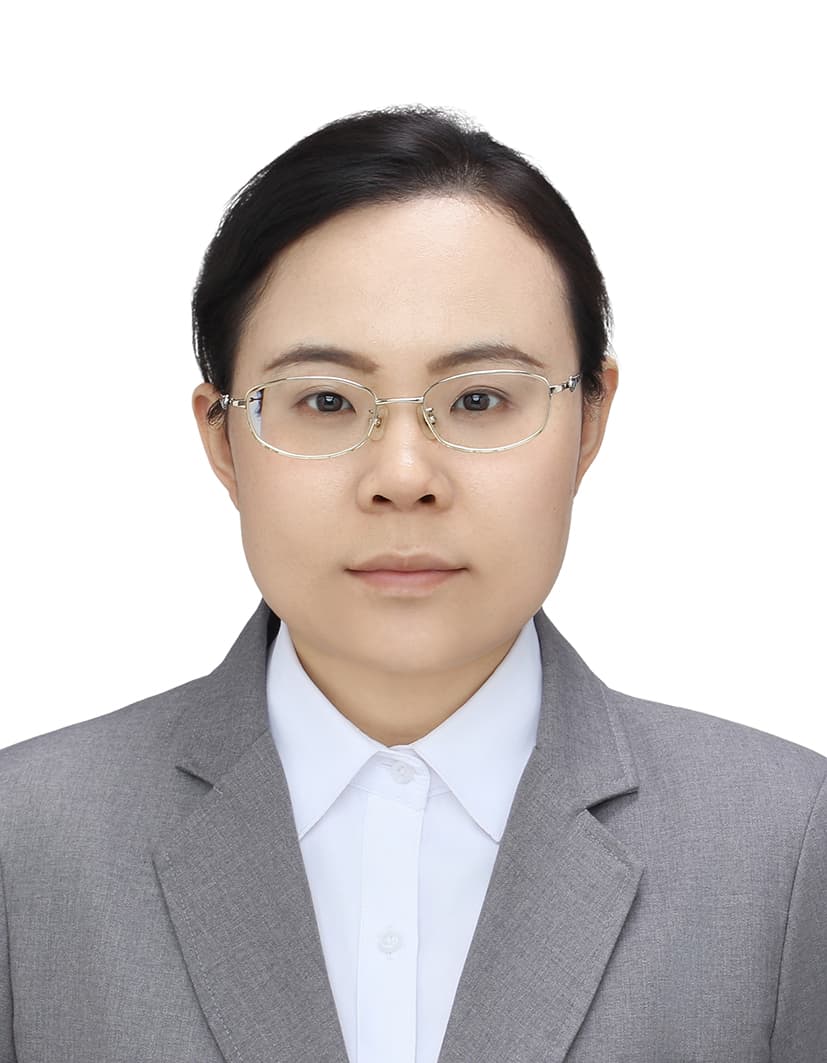
A career in STEM does not always follow a straight line. For Tingting Li, it has been shaped by a continuous willingness to learn, explore new fields and embrace new challenges. What began as an early fascination with advanced materials has evolved into an interdisciplinary research career combining materials engineering, data science and artificial intelligence.
Through the CompSTLar Women in STEM campaign, we are celebrating the women contributing to research and innovation across Europe and sharing the experiences, perspectives and journeys that shape their careers.
Today, Tingting is a PhD researcher at IMDEA Materials Institute, where her research focuses on structural health monitoring of composite structures using artificial intelligence and data-driven approaches.
Composite materials are widely used in aerospace because of their combination of low weight and high strength, but detecting internal damage remains a significant challenge. Tingting’s work explores how sensor data, finite element simulations and machine learning can work together to identify damage more accurately and efficiently.
For her, the appeal lies precisely in bringing different areas of expertise together.
“I enjoy working at the intersection of these disciplines because it enables me to solve engineering problems from different perspectives and develop more innovative solutions.”
The potential impact is equally important. More reliable structural health monitoring could improve safety, reduce unnecessary maintenance, extend the service life of structures and contribute to more sustainable engineering.
“Knowing that the methods I develop could one day be applied in industry and contribute to safer and more sustainable technologies is what inspires me most.”
From a classroom discovery to materials science
Tingting’s interest in STEM began in high school, when a teacher introduced her to the way advanced materials were transforming everyday life and driving technological progress.
She was fascinated by the possibility of designing materials to create lighter, stronger and more efficient structures. That initial curiosity led her to study composite materials at Wuhan University of Technology and later at Beihang University, where she became particularly interested in structural design and mechanical performance.
Her path then took an unexpected turn.
As artificial intelligence began rapidly changing research, Tingting saw an opportunity to connect her knowledge of materials with a completely different discipline. Instead of moving directly into full-time employment, she chose to pursue a second master’s degree in Data Science at the University of Edinburgh.
“I realised that combining AI with material science could fundamentally change how we discover, design, and optimise new materials.”
That decision eventually brought the two strands of her education together. Her PhD now allows her to explore the possibilities created by combining materials engineering and data science, reinforcing her interest in interdisciplinary research.
Where artificial intelligence meets engineering
Artificial intelligence is the development that excites Tingting most about the future of STEM.
Having worked in both material engineering and data science, she sees AI as a way to move beyond traditional trial-and-error approaches and make better use of increasingly complex datasets.
Her own research is a practical example. Machine learning can help combine information from sensors and computational models to identify structural damage earlier, with potential applications not only in aerospace but also in areas such as renewable energy.
“I find it exciting that AI can combine sensor data and computational models to detect damage earlier and improve the reliability of engineering structures.”
For Tingting, the value of these technologies is not limited to making research faster. AI could also contribute to more sustainable engineering by helping reduce unnecessary testing, improve material design, extend the lifetime of structures and minimise waste.
“For me, the most exciting part is that AI is enabling smarter, faster, and more sustainable engineering.”
Learning beyond your own discipline
Tingting’s own career has convinced her that interdisciplinary thinking will become increasingly important in STEM.
The most interesting innovations, she believes, increasingly emerge where different fields meet. Material science, artificial intelligence, data science and digital technologies are no longer isolated areas of expertise.
Her decision to study data science after material engineering was an important step in that direction.
“That experience taught me that learning beyond your original discipline can open entirely new ways of solving scientific problems.”
She also sees continuous learning as essential in a rapidly changing technological landscape. The skills needed at the beginning of a career may not be the same ones needed several years later.
“Technology is evolving so quickly that no degree can prepare us for an entire career. Future STEM professionals need to be curious, adaptable, and willing to learn new tools throughout their lives.”
For the next generation, she believes that the willingness to keep learning may ultimately be more valuable than mastering any single technology.
“In my view, the ability to keep learning may be the most valuable skill of all.”
Finding support without a roadmap
Tingting’s career has also been shaped by the decisions she had to make independently.
Before starting her PhD, she had never really had a mentor in the true sense of the word. Until completing her master’s degree at Beihang University, she had never lived outside mainland China, and most of her major educational and career decisions were made through trial and error.
That included leaving her first job, moving to the UK for a second master’s degree and eventually deciding to pursue a PhD.
“Almost every major decision was made by myself through trial and error.”
Although she did not have a formal mentor during those years, she found encouragement from close friends who believed in her and supported her through difficult decisions.
Her experience changed once she began her PhD. For the first time, she experienced the impact of having supervisors who actively supported her development as a researcher.
They taught her how to approach research systematically, encouraged independent thinking and allowed her to learn from mistakes.
“They have patiently taught me how to conduct research in a systematic way, helped me plan my research, and guided me to think independently.”
That experience has made her particularly aware of the difference that good mentorship can make.
“This experience has shown me how transformative good mentorship can be.”
Challenging assumptions about women in STEM
For Tingting, one of the most important changes needed in STEM is to challenge assumptions about who is naturally suited to technical careers.
She rejects the idea that gender can determine someone’s potential in science or engineering.
“Success in science and engineering depends on talent, curiosity, dedication, and continuous learning, not gender.”
At the same time, she recognises that individual differences are much more meaningful than broad assumptions about men and women.
“While men and women may have different personalities on average, individual differences are far more important than gender. Many women are highly analytical and thrive in technical fields.”
Yet stereotypes can still shape opportunities. In some workplaces and developing countries, traditional expectations may lead employers to see women primarily through the lens of family responsibilities rather than their professional potential.
“Traditional stereotypes still lead employers to assume that women are better suited to family roles than engineering or research. As a result, women may receive fewer opportunities to demonstrate their abilities.”
The effects can begin even earlier. When girls repeatedly hear messages about what women are supposedly capable of, those assumptions can become internalised and influence the choices they make.
“When girls grow up hearing these stereotypes repeatedly, they may begin to doubt themselves and avoid STEM careers despite having the talent to succeed.”
For Tingting, the answer is to focus on the individual rather than the stereotype.
“I believe everyone should be judged by their skills and potential rather than their gender.”
She also sees diversity as something that benefits STEM as a whole, not simply the individuals who gain access to it.
“Equal opportunities benefit not only women but also lead to stronger, more innovative, and more diverse STEM communities.”
There is no single path into STEM
Looking back, Tingting sees her career as a series of decisions that gradually brought her to the intersection of materials engineering and AI.
There was no predetermined plan taking her from one field to the next. Instead, each new step emerged from a willingness to learn and explore something outside what she already knew.
“My own journey has been full of changes, from materials engineering to data science, and now to interdisciplinary research.”
That experience is at the heart of the advice she would give to young people considering a STEM career. You do not necessarily need to know exactly where you are going before you start.
What matters is being willing to take the next step, continue learning and remain open to the people and opportunities you encounter along the way.
“Be brave enough to take the first step, keep learning, and trust that you will meet people who believe in you along the way.”
For young women in particular, Tingting hopes that stereotypes and self-doubt will not determine the boundaries of what they believe they can achieve.
“I also hope more young women believe in their own potential. Don’t let stereotypes or self-doubt limit your choices.”
Her own journey demonstrates why there does not need to be a single, predetermined route into STEM. A career can change direction, cross disciplines and develop along the way.
“Sometimes you don’t need to know exactly where the path will lead. You just need the courage to begin.”
At CompSTLar, we are proud to highlight the stories of women like Tingting Li, whose curiosity, interdisciplinary approach and determination are helping explore new possibilities for intelligent, safer and more sustainable engineering.