
What will it take to turn today’s aerospace breakthroughs into tomorrow’s aircraft?
New materials, smarter manufacturing, artificial intelligence, digital twins and advanced testing are transforming the way aerostructures are designed and produced. But no single technology will define the aircraft of the future. The real challenge is connecting these innovations so that they can work together, scale beyond the laboratory and ultimately meet the demanding requirements of aerospace.
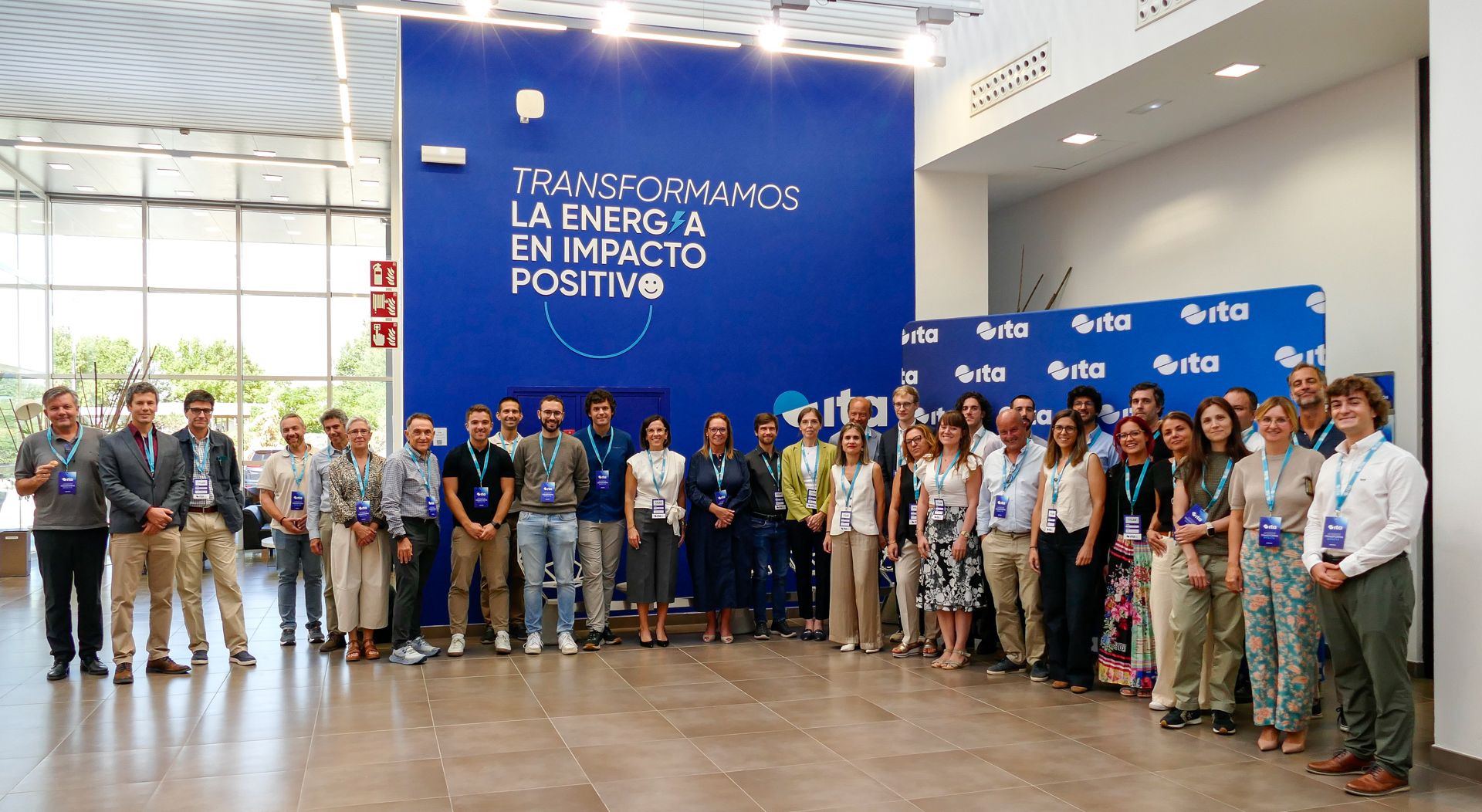
This was the starting point for Wings of Change: Navigating the Future of Sustainable Aerostructures, the first ATLAS Cluster workshop, held on 17 September 2026 at the Aragón Institute of Technology (ITA) in Zaragoza, Spain.
Bringing together the five Horizon Europe projects CompSTLar, TOSCA, PLEIADES, pAIramid and HyperMorpH, alongside researchers, technology centres and industry representatives, the workshop explored a question at the heart of the ATLAS Cluster: How do we move from today’s aircraft to the lighter, smarter and more sustainable aircraft of tomorrow?
Across a full day of discussions, participants travelled through the different stages of this challenge, from circular materials and advanced manufacturing to digital engineering, virtual certification and industrial deployment.
This is precisely where ATLAS (Advanced Technologies for Lightweight Aerostructures and Sustainability) aims to make a difference. Its four ambitions – Connect, Align, Amplify and Accelerate – reflect the reality that many of the most difficult challenges in aerospace innovation sit between disciplines, technologies and organisations.
The Wings of Change workshop put this principle into practice. Rather than treating the five projects as separate research activities, it created a space to explore where their technologies, expertise and future roadmaps could intersect.
The event made one thing clear: the future of sustainable aerostructures will not be shaped by one material, one manufacturing technology or one digital solution. It will emerge from how these different innovations are connected.
That is the opportunity for ATLAS.
By bringing together complementary Horizon Europe projects and creating a space where materials researchers can meet manufacturing specialists, digital experts can engage with certification challenges, and researchers can connect directly with industry, the cluster can help turn individual advances into a more coherent innovation pathway for European aerospace.
The next generation of aircraft will depend on advances across many fields. Increasingly, however, it is the connections between them that will determine how quickly those advances move from research into real aircraft.