SmartHub Dashboard
AFP as a Source of High‑Value Manufacturing Data
During AFP operation at AIMEN, the robotic system continuously collects critical process parameters directly at the head and robot controller level, including:
- Layup speed (head and tow placement speed)
- Compaction pressure applied by the roller
- Temperature data (pyrometer, laser, and thermal camera)
- Robot position and orientation, defining exact fiber placement paths
- Tow start/stop, drops, and sequence information
This data is acquired in real time by Smarthub and linked directly to the part being manufactured, creating a unique digital record for each ply and component produced. The raw machine data is combined, synchronized, and structured to support higher‑level analysis and decision‑making.v
Each data point is:
- Time‑stamped
- Spatially linked to fiber paths and ply locations
- Associated with process strategies defined in digital manufacturing files
This transforms AFP from a “black‑box machine” into a transparent, measurable process.
User‑Friendly Digital Visualization
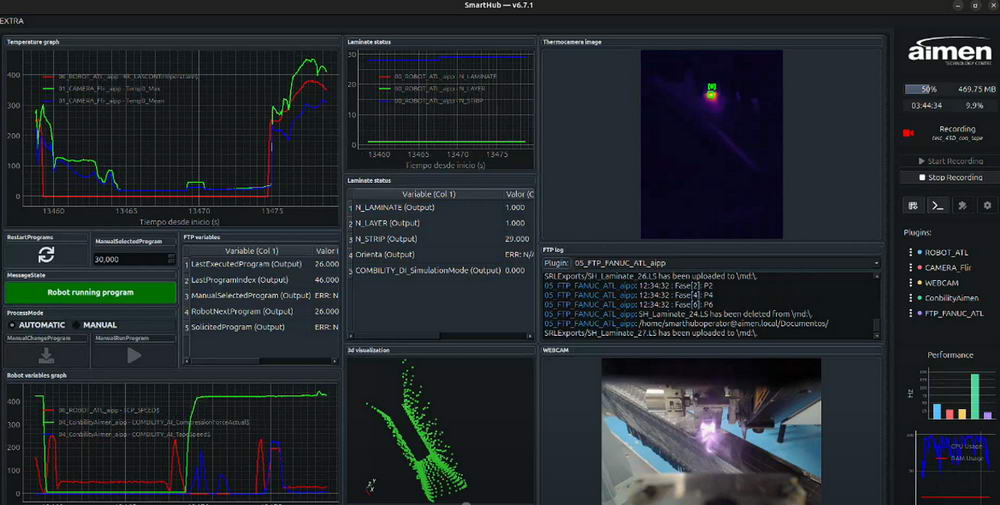
A key focus at AIMEN is making AFP data accessible and understandable to different users—operators, process engineers, and researchers alike. Instead of raw logs, data is presented through:
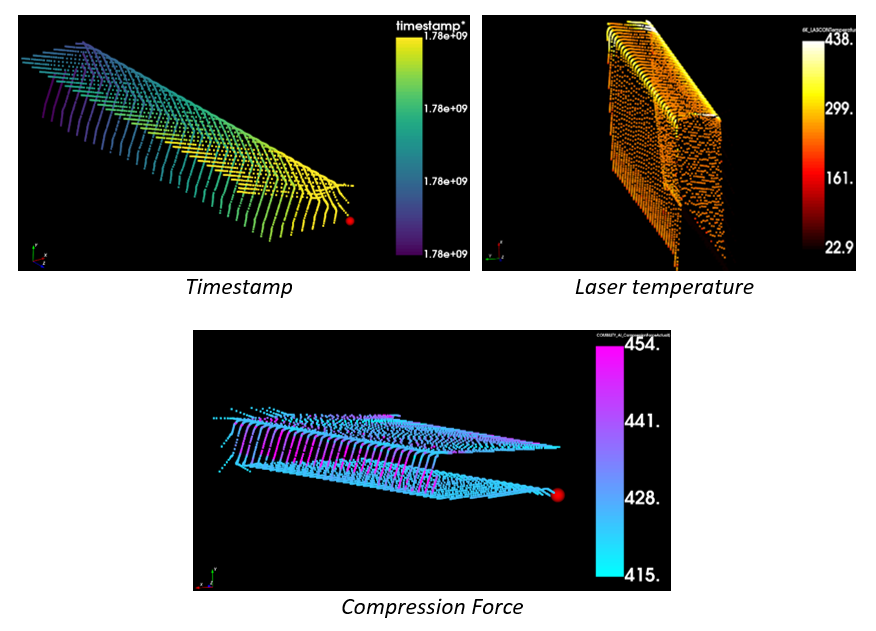
- Graphical overlays on fiber paths
- Color maps of speed, pressure, or temperature across the part
- Dashboards showing live and historical trends
This supports faster troubleshooting, better process control, and shared understanding across teams enabling traceability and quality of the manufactured parts. Within CompSTLar, this approach directly supports the project’s objective of improving reliability, reusability, and industrial readiness of large composite structures.