



Leadership means caring without overprotecting: Meet Beatriz Moya
When we treat one another as equals and respect. Each other’s opinions, we create an environment in which people can grow and develop trust— not only in the mission and its objectives, but also in themselves.
”
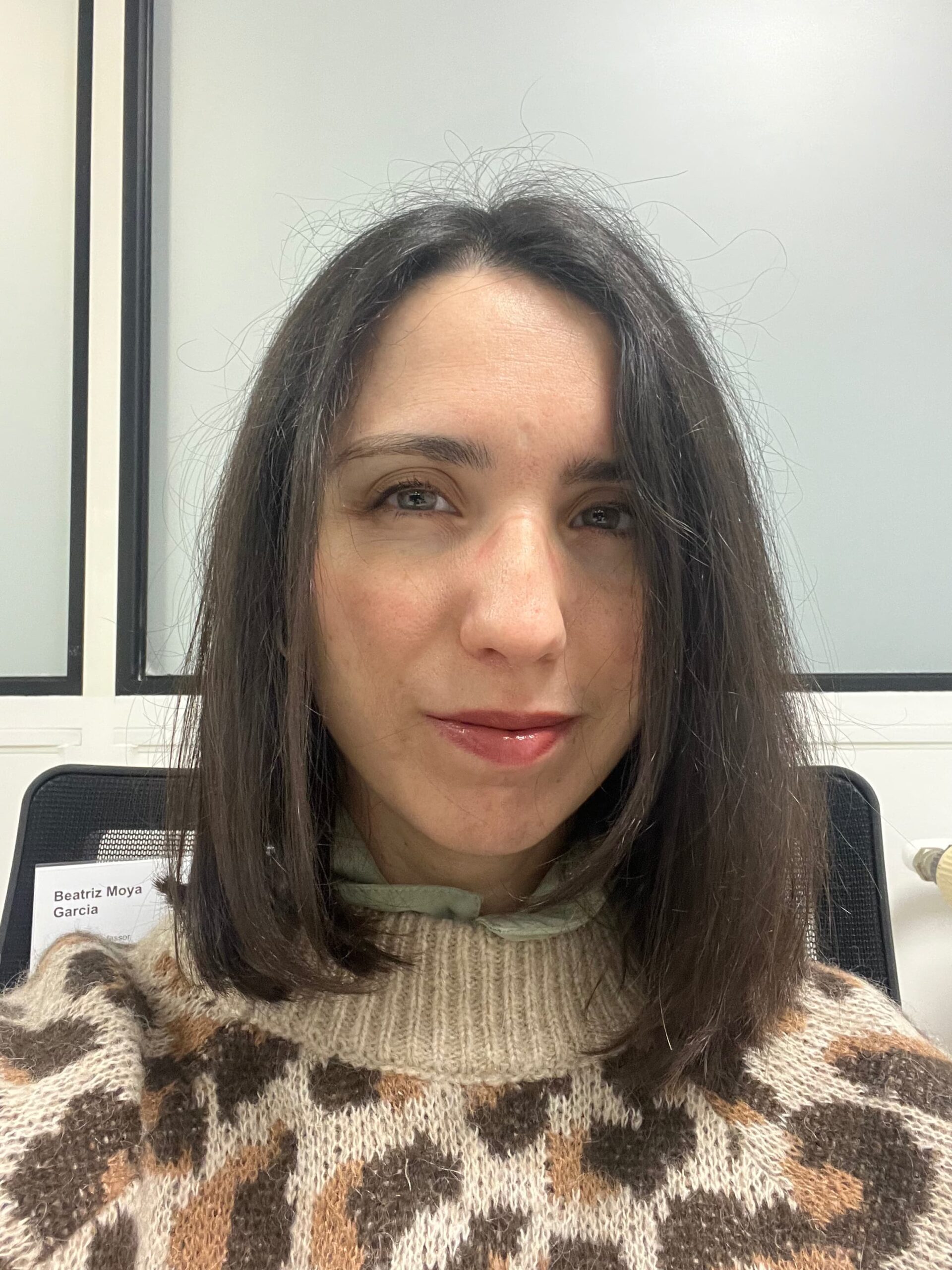
Leadership in STEM is not only about expertise or achievements, but also about how we work with and support the people around us.
As part of our Women in STEM campaign, we are highlighting the women contributing to CompSTLar and exploring the experiences that have shaped their careers, perspectives and approach to innovation.
In this edition, we meet Beatriz Moya García, Associate Professor at ENSAM, where she also holds a Junior Chair dedicated to the digital and numerical transformation of territories. Her research focuses on transferring scientific expertise to real-world engineering problems and empowering decision-makers through augmented engineering environments.
Her work centres particularly on digital twins, reduced-order models and knowledge-driven artificial intelligence, developing numerical methods that can mimic reality while using as little data as possible.
It all started with a Windows 95
Beatriz’s interest in STEM began when she was just five years old.
Her uncle brought home a Windows 95 computer and taught her how it worked. What began as childhood fascination gradually developed into a broader interest in technology and its role in society.
That curiosity led her towards engineering, but engineering did not provide all the answers. Instead, it opened up new questions about what existed behind the tools she was using and how technology could be pushed beyond what had already been created.
“When I was little, I was always interested in how the world worked, especially technology. That is why my uncle brought home a Windows 95 computer and taught me how it worked when I was just five years old. Some years later, this interest grew and evolved towards understanding the role of technology in society.”
Eventually, those questions led Beatriz to pursue a PhD. The questions themselves have continued to evolve, but the curiosity behind them has remained.
“With many questions and not enough answers, I started a PhD. Since then, my work has been driven by the same curiosity: using science and technology not only to understand the world as it is, but also to wonder, imagine, build what it could become.”
Research is tough. And that’s the point
Research does not always provide immediate answers. It can involve uncertainty, failed attempts and long periods of searching for solutions that may not yet exist.
For Beatriz, learning to work within that uncertainty is part of what makes research meaningful. It requires patience and creativity, but it also creates an opportunity to help others develop those qualities themselves.
One of the aspects of her work she finds most rewarding is supporting early-stage researchers as they develop their own intuition and confidence.
“Research is tough. As I mentioned before, we often have questions but no immediate answers. Being a researcher therefore means learning to think outside the box and explore new solutions, even when they are difficult to find.”
For her, mentoring is therefore not simply about providing answers. It is about giving people enough freedom to develop their own questions and discover how they want to approach a problem.
“Research is also about helping early-stage researchers develop their own intuition, and their patience, encouraging them to ask their own questions, and giving them the confidence and freedom to become independent.”
This is one of the reasons Beatriz sees research as something larger than individual achievement.
“Research is not only about building our own careers, but also about empowering others to grow, find their own path, and reach even greater heights.”
Learning from anyone, regardless of position
The more interdisciplinary research becomes, the more important collaboration is. For Beatriz, effective teamwork begins with a willingness to listen and the humility to recognise that expertise does not always belong to the most senior person in the room.
People arrive at a problem with different experiences, disciplines and perspectives. Those differences can challenge established ways of thinking, but they can also reveal solutions that one person working alone might never have considered.
“Working with people from different backgrounds, disciplines, and levels of experience means accepting that we do not always have the best answer. Valuable insights can come from anyone involved, regardless of their position or seniority.”
Creating the right environment is therefore just as important as bringing the right expertise together. People need to feel able to speak, question assumptions and offer ideas that may not immediately fit with the dominant view.
“We need to create spaces for open discussion, encourage people to share their ideas, and remain receptive to perspectives that may challenge our own.”
And genuine humility also means being prepared to change your mind.
“Humility also means recognising our limitations and being willing to change our minds when someone offers a better solution. In the end, effective teamwork is based on the understanding that we can learn something new from anyone, every day.”
Leadership is about creating space for others
Beatriz’s approach to collaboration naturally extends into her understanding of leadership.
For her, leadership is not about having all the answers or protecting people from every challenge. It is about understanding the people you work with and creating the conditions in which they can develop their strengths.
“Leadership, to me, means caring without overprotecting, and understanding the circumstances of the people who work with you in order to bring out their best qualities.”
That requires trust. When people are treated as equals and their opinions are respected, they can develop confidence not only in the team’s objectives, but also in themselves.
Beatriz’s own approach has been shaped by the mentors she encountered throughout her career.
“I have been very fortunate to have mentors with great hearts, and I believe that this is one of the most valuable qualities they passed on to me. It is probably no coincidence that their teams were also highly successful.”
For her, good leadership is therefore closely connected to the ability to make other people feel that they have room to contribute, develop and become independent.
Success can mean watching others grow
When asked about a career achievement she is particularly proud of, Beatriz does not immediately point to a specific publication, award or professional milestone.
Instead, she talks about the people she works with.
“It is difficult to say, as I feel that I still have so much to accomplish at this stage of my career. It may sound a little cheesy, but I feel proud whenever I publish a paper with my colleagues or help them progress in their own careers.”
It is a perspective that says something about how Beatriz measures impact. A successful career is not necessarily defined only by what you accomplish yourself. It can also be reflected in the people you help develop and the opportunities you create for others.
That idea runs throughout her approach to research, collaboration and leadership.
What comes after a PhD?
For early-career researchers, one of the most difficult questions can be what happens after the PhD.
Academic careers can be unstable, and the pressure to constantly prepare for the next position can make it feel as though there is one narrow route to success.
Looking back, Beatriz’s advice to her younger self would be to put less pressure on having the future figured out.
“I think my advice would be not to put so much pressure on ourselves when thinking about what comes after a PhD and our future as researchers. There is not only one possible future, but many, both in academia and in industry.”
Instead of trying to predict every next step, she encourages young researchers to remain open to opportunities and to consider what kind of environment genuinely matches their interests, values and way of working.
“The key is to remain open, look for opportunities, and understand which environment best matches our interests, values, and way of working.”
There isn’t only one possible future
The pressure to compete for the next position can have consequences beyond career planning. Beatriz has seen how it can contribute to impostor syndrome, particularly among women who may begin questioning whether they belong in academia or whether they are good enough to become independent researchers.
“Because of the instability of academic careers, we often feel that we must constantly prepare ourselves to compete for the next position. This pressure can prevent us from enjoying the process and can contribute to impostor syndrome.”
For Beatriz, stepping away from this mindset does not mean giving up ambition. It means recognising that there are many ways to build a meaningful career, and that the right opportunity may not look like the one you initially imagined.
“Unfortunately, I have seen this affect many colleagues, particularly women, who begin to doubt whether they belong in academia or whether they are sufficiently good to become independent researchers.”
With time and perspective, she believes it becomes easier to see beyond the immediate competition.
“With time and perspective, we realise that there are many possible positions and that, eventually, we can find an opportunity that fits our skills, ambitions, personal needs, and desired balance between professional and personal life.”
That message is particularly relevant for young women navigating STEM careers. There is no requirement to follow one predetermined route, and there is no need to measure yourself against a single definition of success.
Keep asking questions
From the five-year-old discovering a Windows 95 computer to the researcher working on digital twins and intelligent engineering systems, Beatriz’s career has changed considerably. Yet the thread connecting these different stages is remarkably simple: she kept asking questions.
What is behind the tools we use? How can technology help us imagine something new? How can we create better solutions? And perhaps most importantly, how can we help others find their own answers?
Her story is a reminder that a STEM career does not have to follow a perfectly straight path. It can evolve through curiosity, uncertainty, collaboration and unexpected opportunities.
And sometimes, not knowing exactly where you are going can be part of the journey.
“There is not only one possible future, but many.”
At CompSTLar, we are proud to highlight the stories of women like Beatriz Moya García, whose curiosity, collaborative spirit and commitment to empowering others are helping shape not only the technologies of tomorrow, but also the people who will create them.